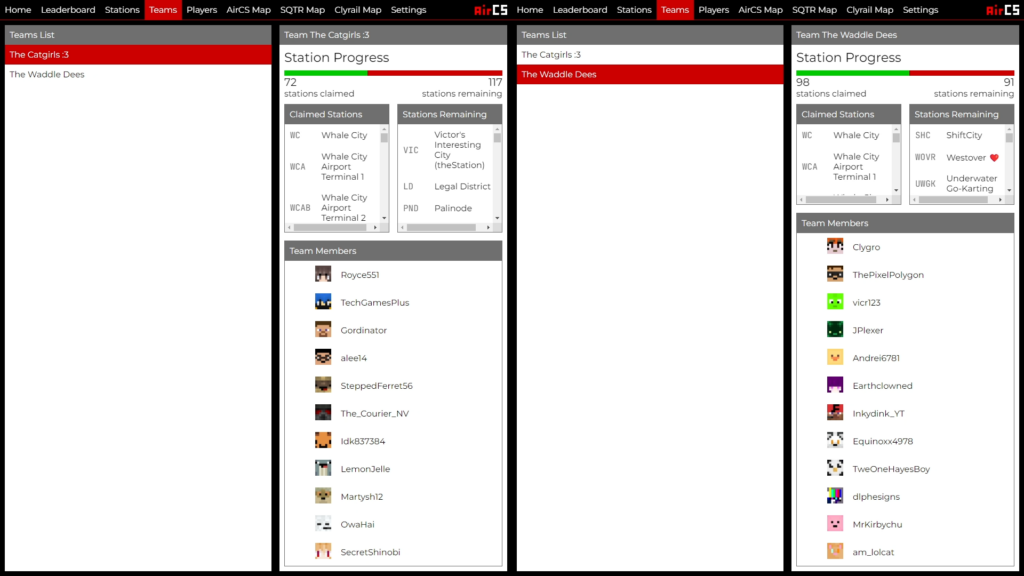
A dashboard in continuous use for over four years
The AirCS Race dashboard is the central hub of the AirCS Race game. This interface, made as part of an update for a Minecraft server-wide game, proved a significant increase in the efficiency of information delivery, to the point where this dashboard has been in continuous use with little changes since 2021. It came as a result of understanding the behavioural patterns of our userbase, as well as our existing knowledge on how we’ve run the game previously.
Background
AirCS is a fictional train network in the bits & Bytes Minecraft server, one of its largest and most far-reaching. Thus, the AirCS Race is an annual game, initially created as a casual game in 2018, to see who can get to all its stations in the fastest time, to the effect of Jet Lagged: The Game. Below is a video of how that race looked:
Since 2018, the game had been dormant for reasons pertaining to the community’s history, and in that time, it was thought the game and its server would be a distant memory. However, in 2021, the bits & Bytes Minecraft server was revived. AirCS Race would run once again for its 3-year anniversary.
Revival
From the onset in the planning stages, the Minecraft server team immediately recognized the game cannot run exactly the same as it had before. The server had grown extensively and the networks grew in size. Furthermore, AirCS’s competitors were allowed for the first time ever, significantly increasing the chance for error.
To accommodate for this change, the game had to move from an honour system of calling stations, to a fully automated, verifiable, and traceable system. To support this, a web interface would go alongside a special server-side plugin, something we were able to do since we had full control over the server’s backend.
The interface for this new system is composed of two components: a Minecraft view and a web view, the latter of which I was in charge of designing the interface for. The web view is a real-time system and was a vital component of the interface. Virtually everyone in our Discord community, especially those playing on the Minecraft server, has at least one additional monitor for their computers, or have a phone or tablet in constant reach at all times. With that, we designed the web interface with these goals in mind:
- Displaying more complex views than what is possible in the Minecraft interface
- Serving as a central dashboard for players, spectators, and producers.
We wanted the web interface to be intuitive to use, but to also be powerful enough to support communication within the game and without. To account for these design goals, we needed to create multiple views that would quickly answer questions the player may have at any time:
- The leaderboard: “How am I doing compared to everyone else?”
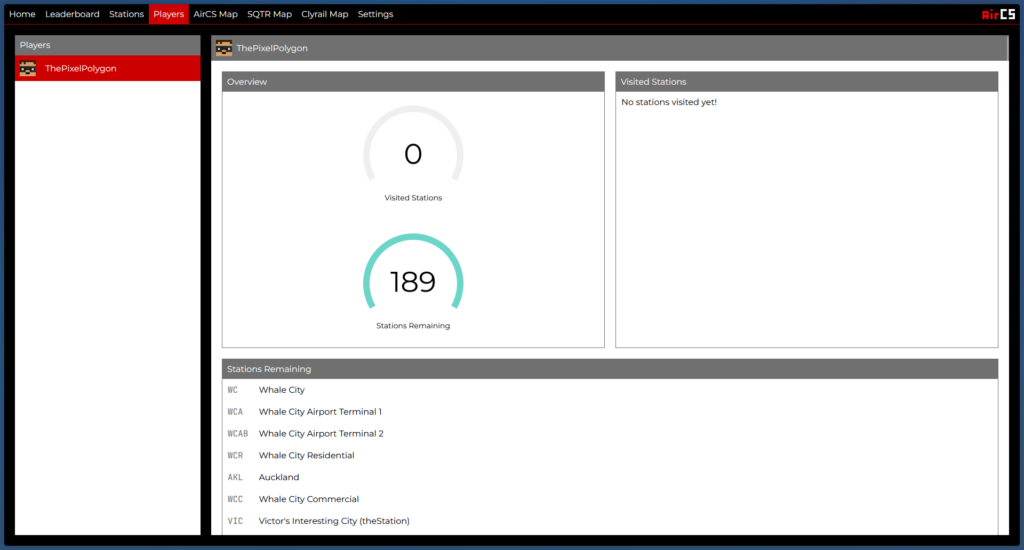
- Individual player statistics: “What’s my progress?”
- Stations view: “Have I visited this yet?”
These core questions were a result of a study of our previous game footage.
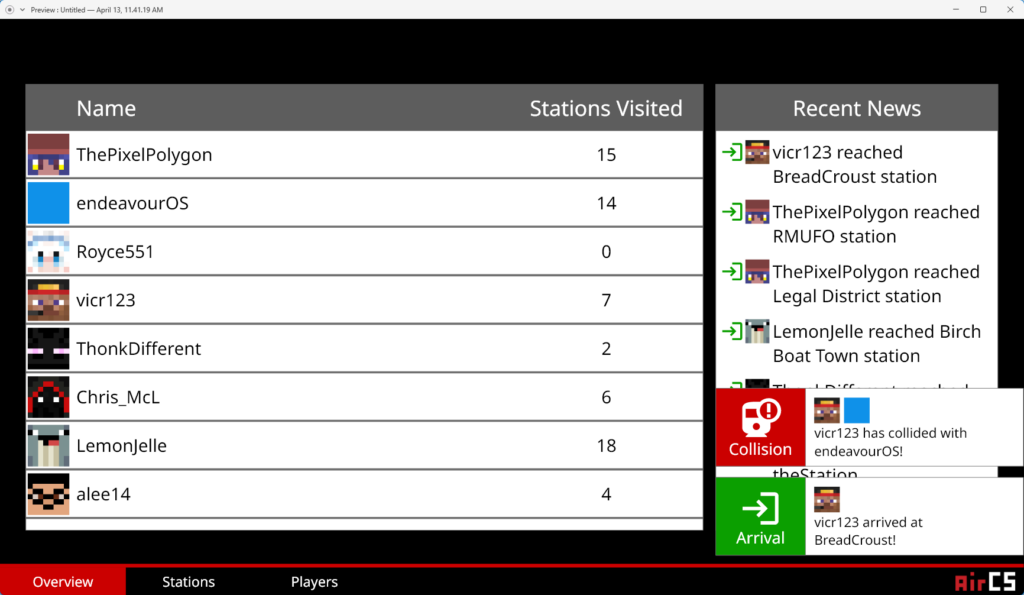
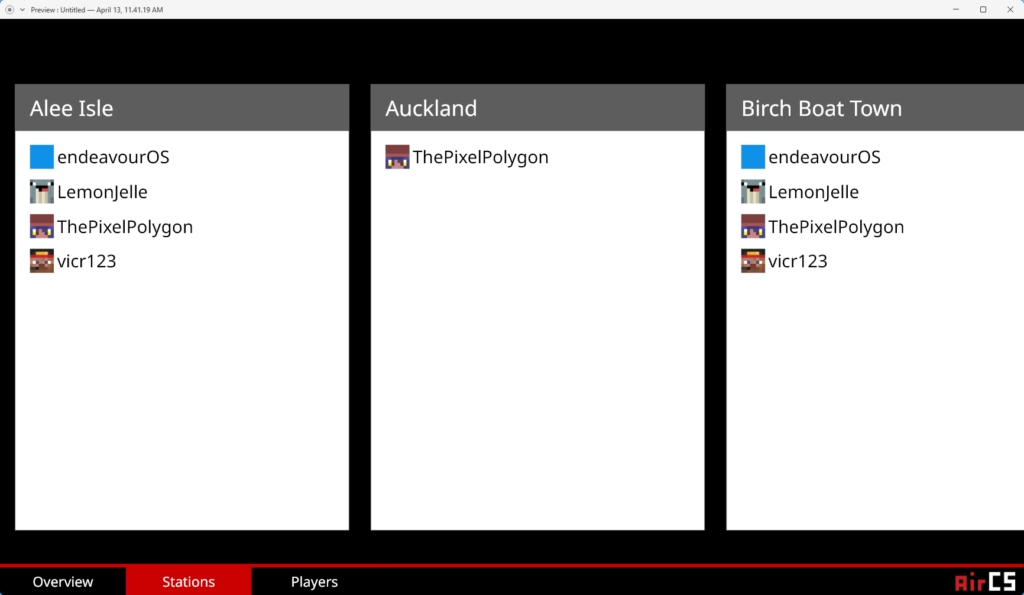
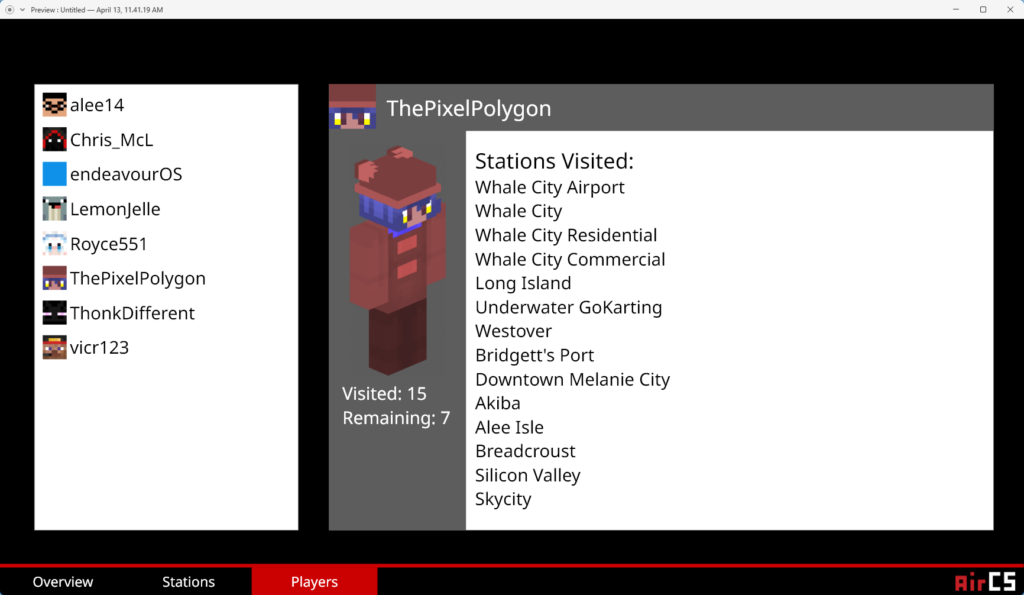
The player stat list was an especially vital component, and early on we caught some critical flaws with the early prototype. For one, the quick counters were not placed very strategically, the player model fighting for attention when in reality it was not actually important. Second, the stations list suffered from information asymmetry: the player would know where they’ve been but not where they haven’t. Thus, a major revision was needed, which appears as the final statistics dashboard:
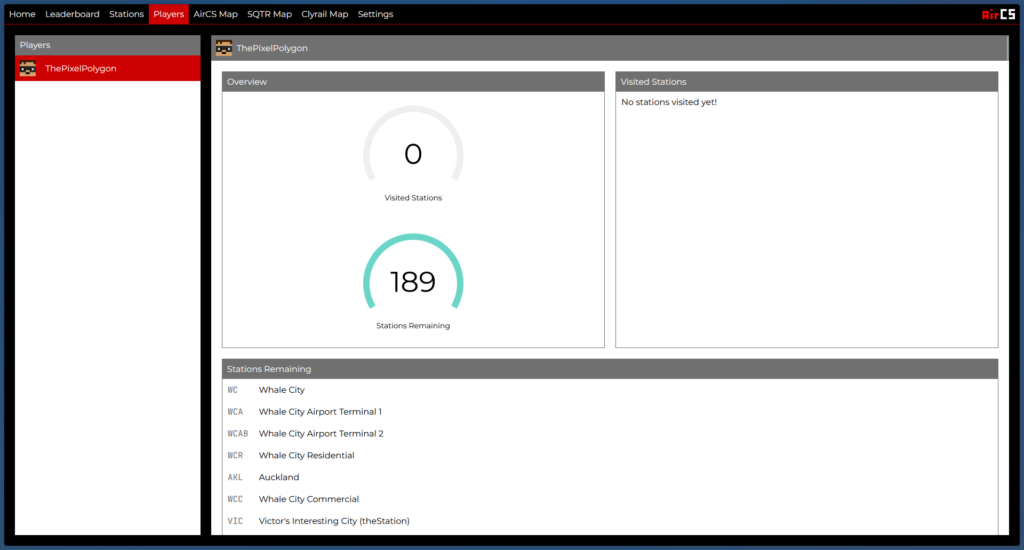
The final interface has kept up with increases in server complexity and a growing playerbase over the years, and was a part of turning AirCS Race into a cultural institution. It laid the foundation for all races to follow after that.
The Team Update
After 2021, the bits & Bytes Minecraft server had, for all intents and purposes, become a staple of the bits & Bytes community itself. With that, and with more members joining the community, the server kept growing and growing. That also meant that rail networks had to keep up to account for the increase in server settlements. At some point, it became impractical to continue running the AirCS Race itself in the same format. So, plans emerged in 2023 to turn the game from an individual race to a team race.
This, of course, meant the AirCS Race plugin had to be updated once again, and that included the web interface.
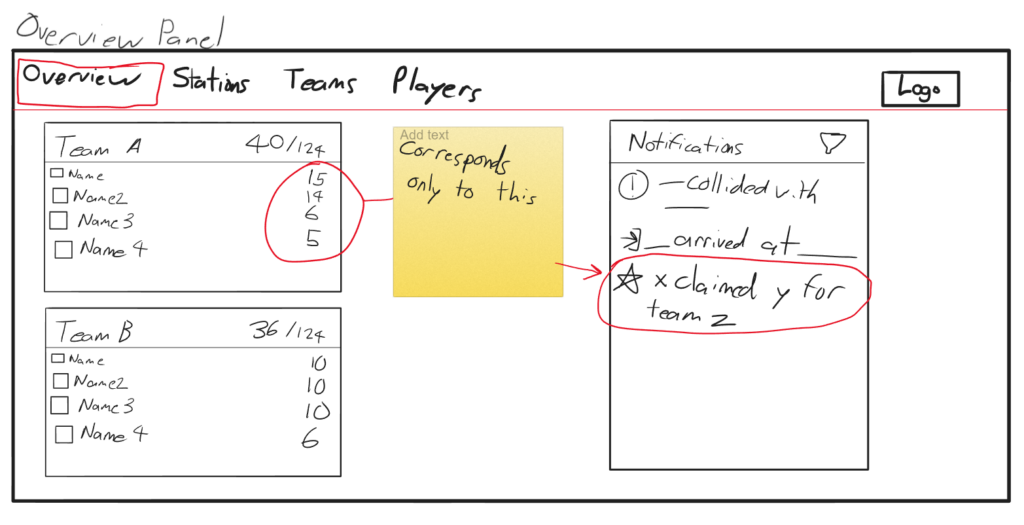
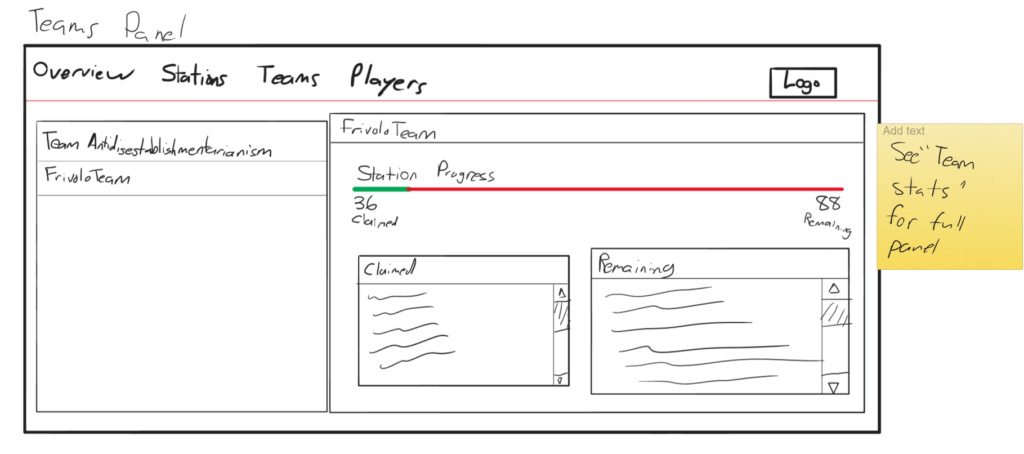
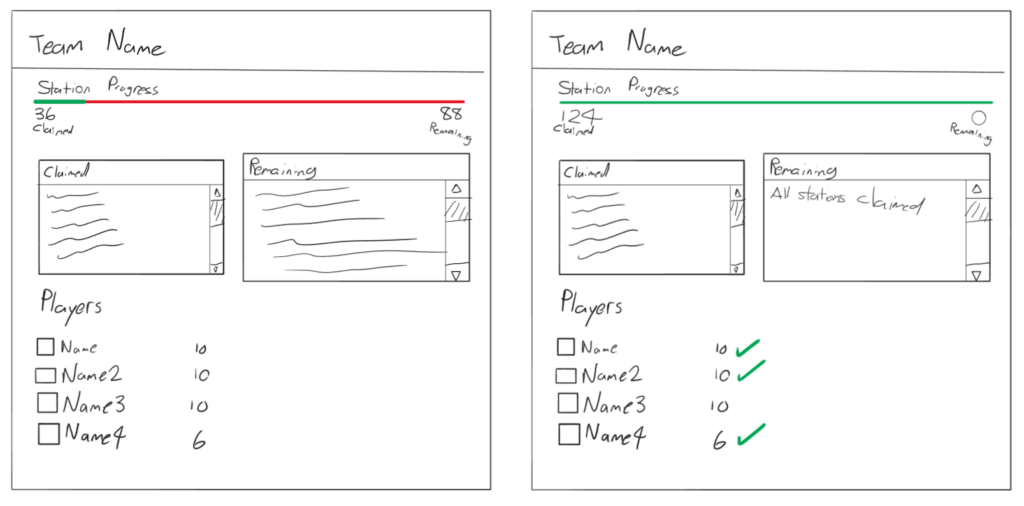
As we had a strong foundation for AirCS Race visualizations, most of the existing interface and codebase was kept for the teams race. The only things that were needed were interfaces to accommodate team communication and facilitate co-operation.
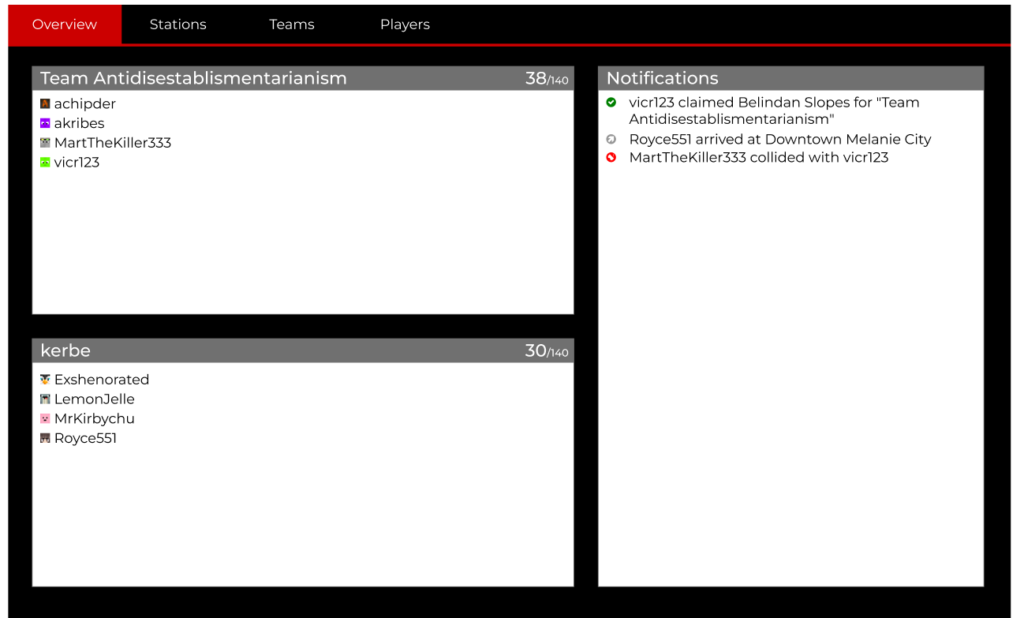
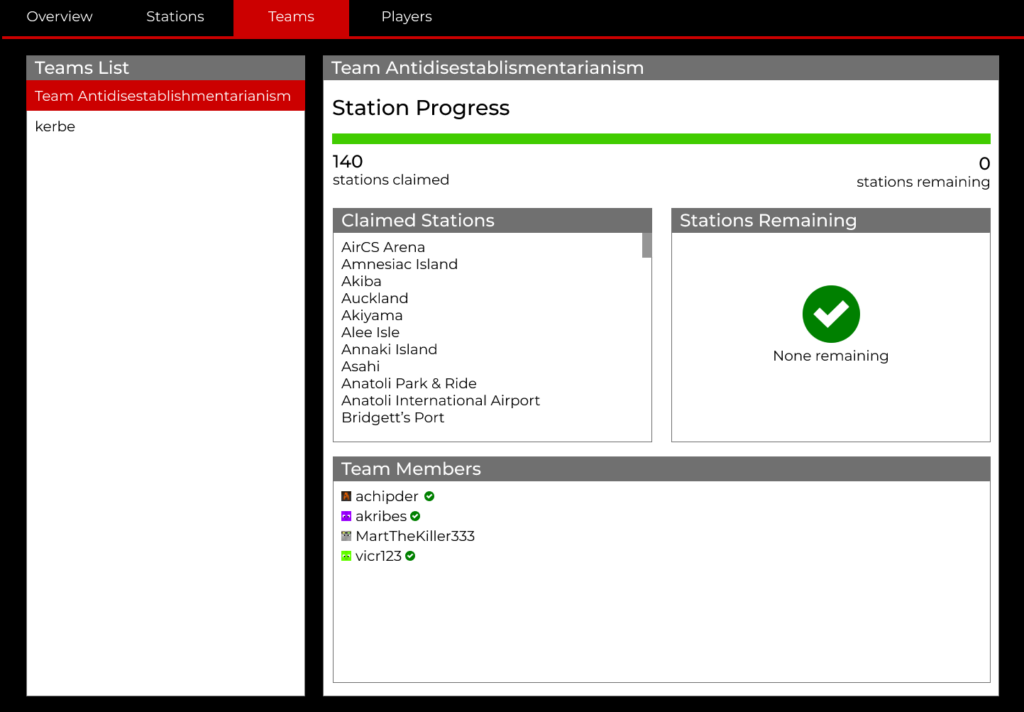
Team AirCS Race was played for the 2024 and 2025 editions of AirCS Race. The interface and the race proved successful in player satisfaction and scale. Captures of the dashboard were also used to assist media production. Even with a further upgrade involving a Minecraft mod to be installed directly on users’ systems for stat tracking in a later year, the web interface still served as the central point of communication thanks to its strong organizational foundations and clear messaging.