EDS345 Design Thinking Showcase – Top 3 in Show
“A school that really values creative development”
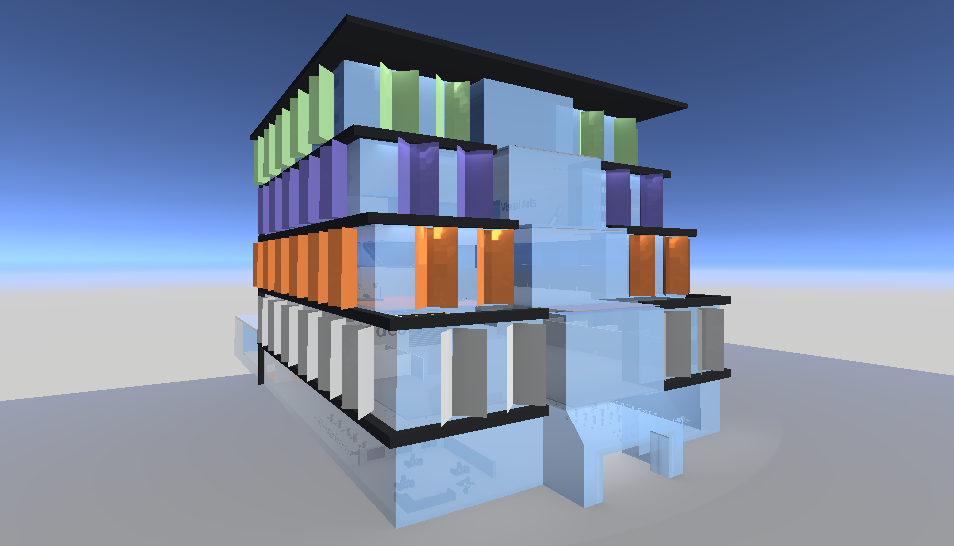
Kreativ Secondary School is a project combining my expertise in user experience design, along with my team’s collective expertise in their own areas of pedagogy. This included learning styles, competencies, and the emergence of trends in educational technology or “edtech”. This was an exercise in design thinking, applying that philosophy to the development of educational technology. We chose to tackle this project by looking into creating a smart educational space: how to integrate technologies into classrooms in such a way that it would augment the learning experience. We’ve set out on a rigorous mix-methods approach to research, looking at existing schools within Canada and without, surveying and interviewing recent high school graduates. I was in charge of the qualitative studies, interviewing people and really diving deep into their experiences.
What we found was this: our participants told us that they never had a chance to express themselves freely in school, and didn’t have access to the technology to do so.
This told us we needed to create a better school: one built on curiosity and inquiry. We’d give students free and open access to all the technology they would need to fully express themselves. Our curricula would be designed in an open-ended way, such that no matter what discipline students found themselves in, they could submit their projects the way they felt was right, and accommodated their learning style.
Below is an elevator pitch with some of our [anonymized] findings, and our intent on how to fully integrate technology into learning spaces.
Obviously, we couldn’t build a physical space in such a short time. What we ended up doing was to show off a proof of concept in two mediums, one of which, the one I was in charge of, being a fully interactive VR prototype to fully immerse stakeholders. This allowed us to fully explore ideas to add interactivity into any experience.
The idea was unusual, since we were essentially building an entirely new school from the ground up. Instead of going from the normal low-fidelity prototype moving up to high-fidelity, we started with storyboarding how we intend for students to interact with the environment. We also engaged in multiple exercises detailing how we may transform the spaces themselves such that the technology and the space would harmonize with each other.

For the prototype, a few seating areas were created, along with what we felt were the most important and specialized rooms. We designed them with cutaway doors and made every room an open space (wherever possible).
We’d split tasks amongst ourselves based on our strengths. One part of the team led a physical prototype of the school, so participants can see our plan at a glance. The other part, the one I was in charge of, led the interactive experience. We deliberately chose a VR-based experience using Unity and the VRChat engine and let people explore and interact with the space on their own terms for them to fully understand the difference.
I led the interactive team, supporting them and getting them comfortable with VRChat Unity development.


As the name “Kreativ” suggests, we built the school around specialty rooms first, before delving into standard classrooms. This was an intentional decision to demonstrate our educational model, that is to say, one built on harnessing students’ drive for exploration, rather than prescription. We wanted all the technology to be freely accessible on demand. That way, students would be encouraged to use the technology available to them to express themselves in their projects the way they felt was right.
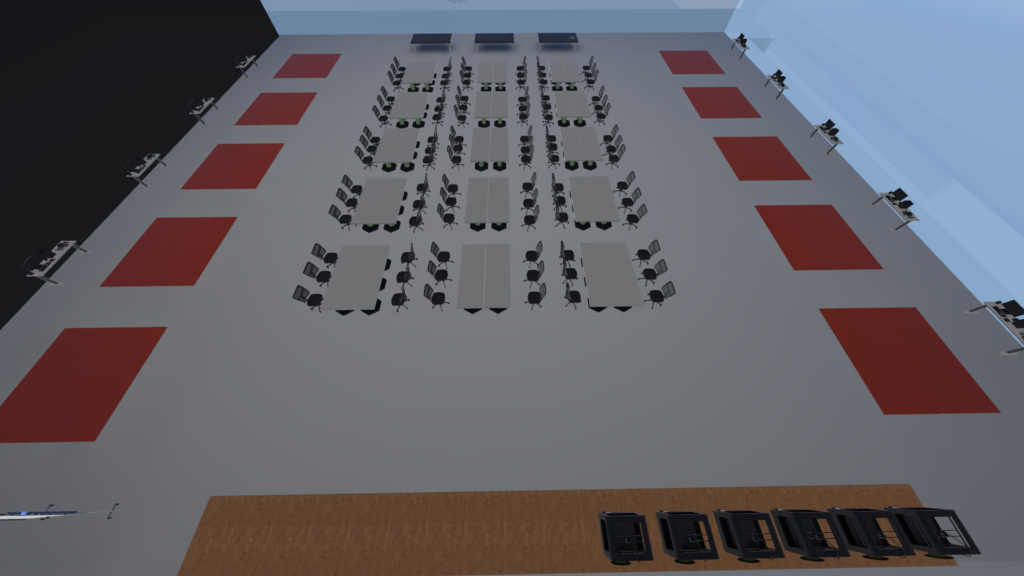
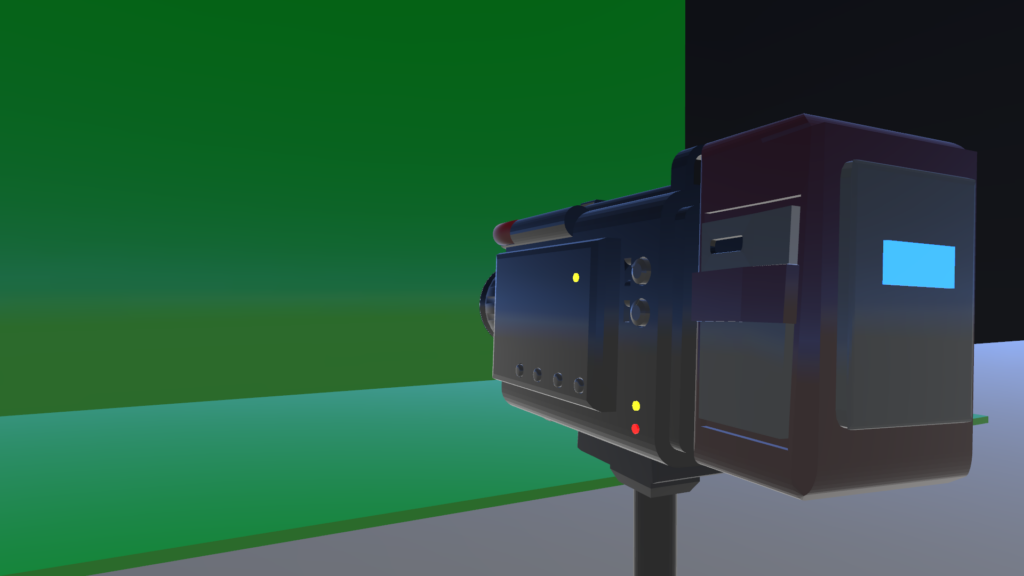
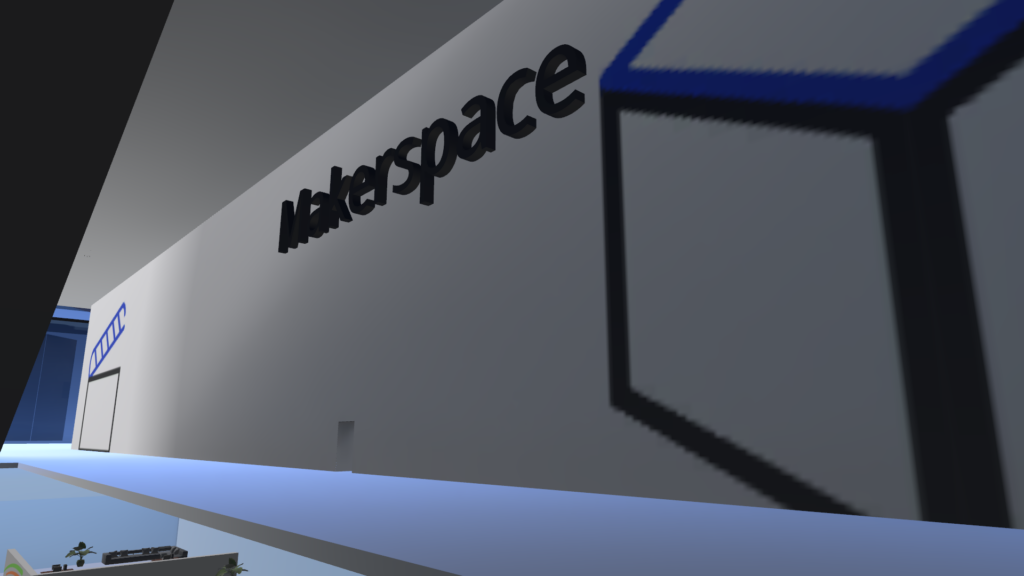

To further emphasize a collaborative environment, our team devised a system called “Dynamic Desks”. These are desk modules that fit together like a puzzle, allowing for complete reconfiguration to suit specific goals at any time. They are are used in place of any general purpose desk wherever possible, including in any standard classrooms we’ve built. This was something only possible with the VR experience.
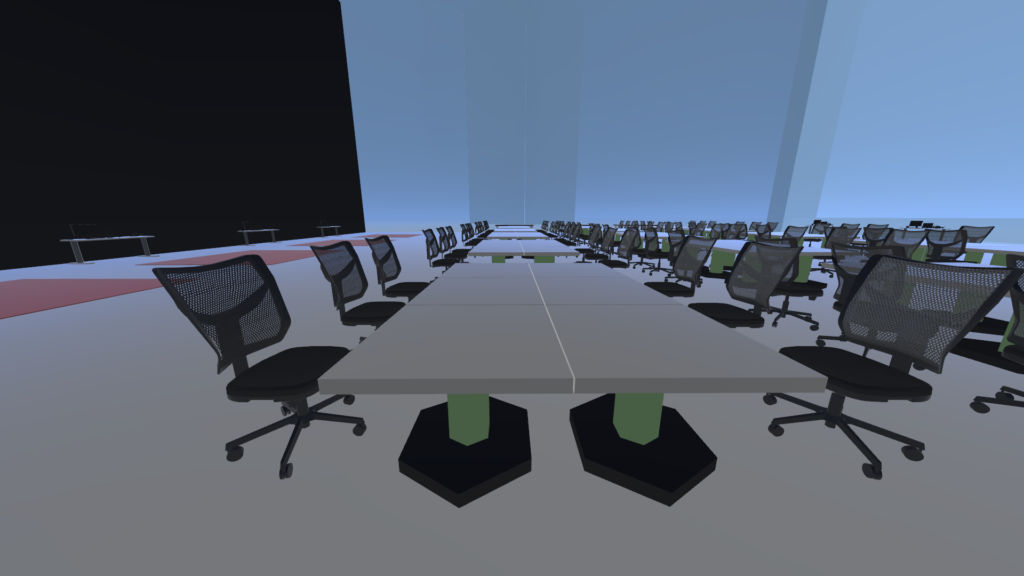
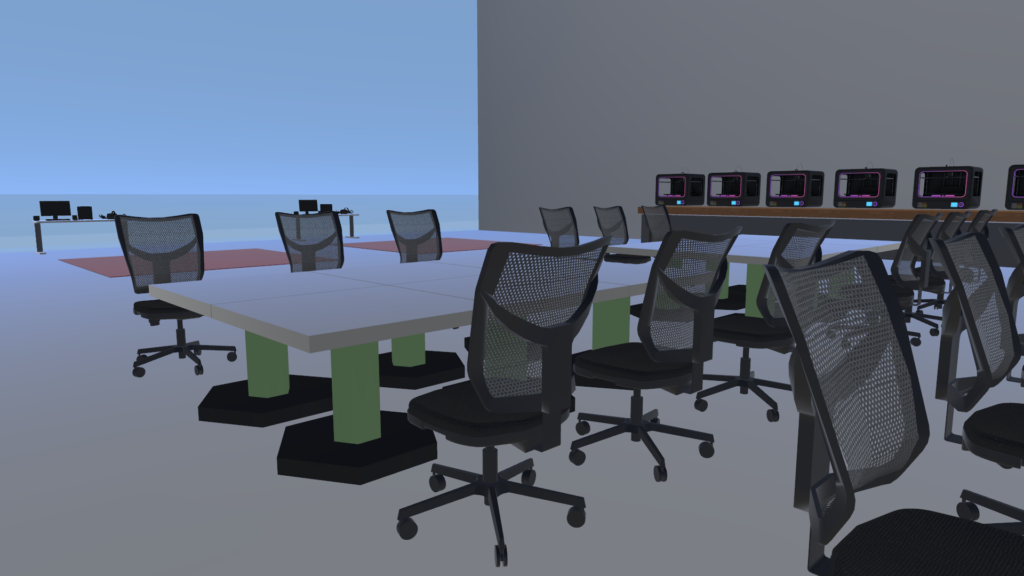
During user testing, people found the mixed-modality presentation to better their understanding of the school’s concept. The interactive portion of the demonstration proved the ‘why’ of this project. Kreative Secondary School would go on to place in the top 3 in the educational design showcase.